
How to Read Japanese Manga: The Complete Beginner's Guide to Panels, Flow & SFX
Master reading traditional Japanese manga. Learn right-to-left panel flow, gutter pacing, dialogue hierarchy, and decoding onomatopoeia sound effects.
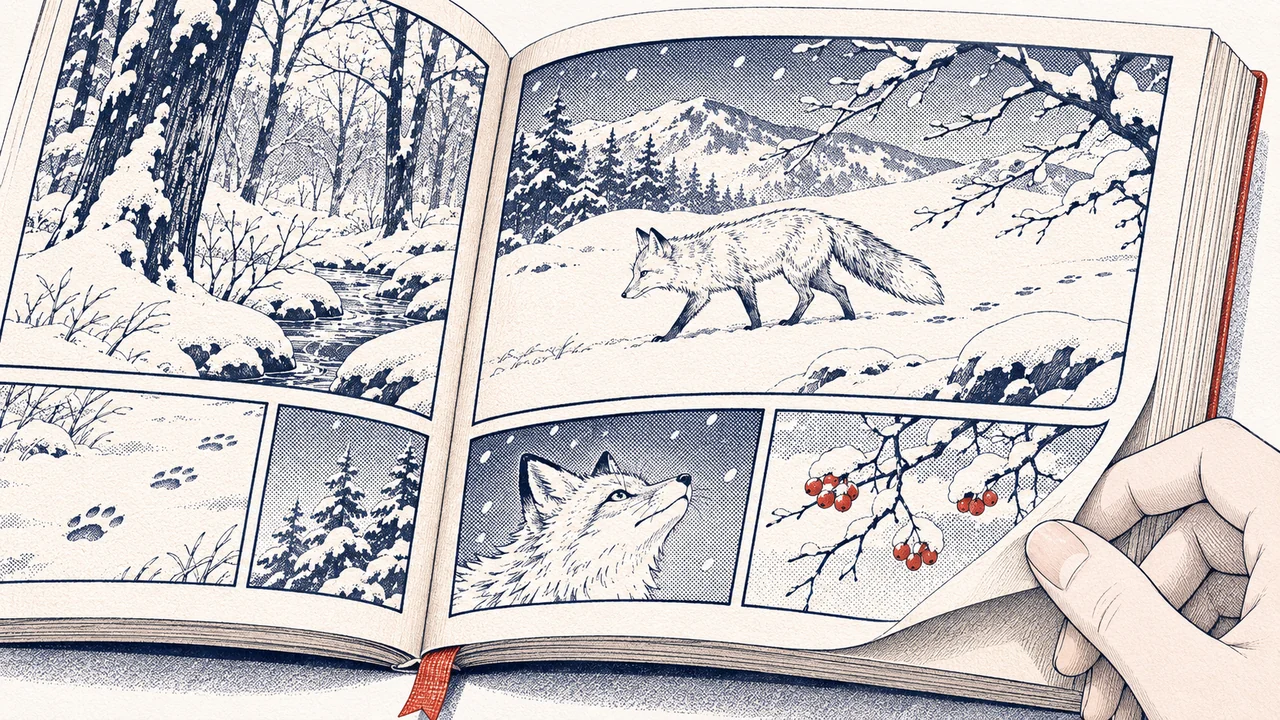
For readers picking up a Japanese manga for the first time, opening the book from what Westerners consider the "back cover" and reading from right to left can feel disorienting.
Yet, Japanese manga layout is not an arbitrary quirk—it is a sophisticated, centuries-old visual grammar evolved from traditional Japanese scroll painting (emakimono) and vertical script (tategaki). Once you grasp its core visual rules, reading manga feels as natural and intuitive as watching a film.
Here is the complete beginner's handbook to navigating manga pages, panel gutters, speech bubble hierarchy, and sound effects.
1. The Cardinal Rule: Right to Left, Top to Bottom
Western comics usually read from left to right. Japanese manga typically starts at the top right and moves left across each row.
- Book Orientation: You open the manga with the spine on the right side.
- Page Turning: You flip pages from left to right.
- Panel Flow: Always read the top-right panel first. Scan across horizontally to the left. Once the top tier of panels is complete, drop down to the rightmost panel of the next tier.
2. Navigating Complex Panel Gutters
Mangaka do not always draw neat rectangular grids. Dynamic action scenes feature slanted, overlapping, or borderless panels. How do you know where to look next?
The "Gutter Width" Rule
Notice the white spacing between panels (called gutters):
- Thin vertical gutters: Panels separated by a thin vertical line belong to the same narrative beat or moment. Continue moving to the left.
- Thick horizontal gutters: A wide horizontal gap signals a major pause, a scene transition, or a progression down to the next row.
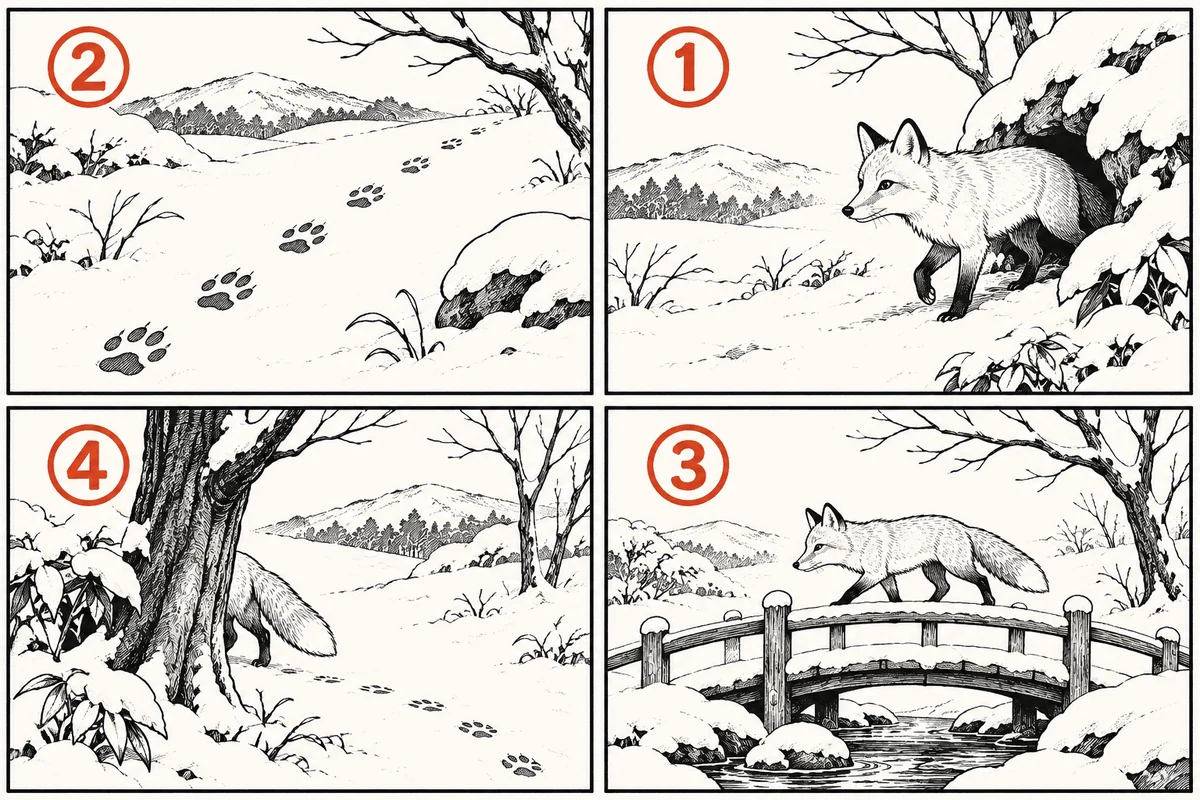
- Start with Panel 1 on the right.
- Cross the thin vertical gutter to Panel 2 on the left, in the same row.
- Cross the thick horizontal gutter to Panel 3 in the next row down.
3. Dialogue Bubble Hierarchy within a Panel
Once your eyes land on a panel, how do you read the speech bubbles?
The same Right-to-Left, Top-to-Bottom rule applies inside the frame:
- The Highest, Rightmost Bubble: Spoken first.
- Lower or Leftward Bubbles: Spoken subsequently in reply.
- Whispers & Off-Bubble Text: Small, handwritten side notes drawn outside speech balloons represent internal thoughts, side jokes, or ambient murmuring.
4. Decoding Manga Sound Effects (Onomatopoeia)
Japanese has one of the richest onomatopoeic lexicons in the world, divided into:
- Giseigo (Phonomimes): Sounds made by living beings (e.g. Kero kero for a frog croaking).
- Giongo (Phonomimes): Inanimate physical sounds (e.g. Zaaa for heavy rain).
- Gitaigo (Phenomimes): Depicting silent psychological or physical states (e.g. Doki doki for a pounding heart, Shiin... for deafening silence).
Top 6 Essential Manga Sound Effects to Know:
| Japanese SFX | Romaji | Meaning & Visual Context |
|---|---|---|
| ドン! | DON! | Heavy dramatic impact, grand reveal, or sudden shock |
| ドキドキ | Doki-Doki | Fast heartbeat (romance, nervous anticipation, fear) |
| ゴゴゴ… | Gogogo... | Ominous rumbling, menacing aura (famous in JoJo) |
| ざわ… ざわ… | Zawa... Zawa... | Crowd murmuring, tense uneasy atmosphere (Kaiji) |
| ニコニコ | Niko-Niko | Warm, cheerful beaming smile |
| バキッ! | Baki! | Loud snapping or crushing impact (fist hitting bone) |
5. Level Up Your Reading with AI Manga Tools
If you encounter an untranslated raw volume or want to practice reading Japanese with an interactive safety net:
- Use AI Manga Translator to process raw chapters.
- Take advantage of the Side-by-Side Dual View to check how Japanese vertical kanji map directly to localized dialogue.
References & Authoritative Sources
- National Institute for Japanese Language and Linguistics (NINJAL) — Balanced Corpus of Contemporary Written Japanese (BCCWJ)
- Japan Foundation & Japan Educational Exchanges and Services — JLPT Language Competency and Practical Manga Reading Guidelines
- W3C Internationalization Working Group — Requirements for Japanese Text Layout (JLReq)