
The Ultimate Manga OCR Guide: From Tesseract to Vision Transformers
A deep technical dive into Optical Character Recognition for Japanese manga. Learn why standard OCR fails on vertical text and how Manga-OCR & Vision Transformers solved it.
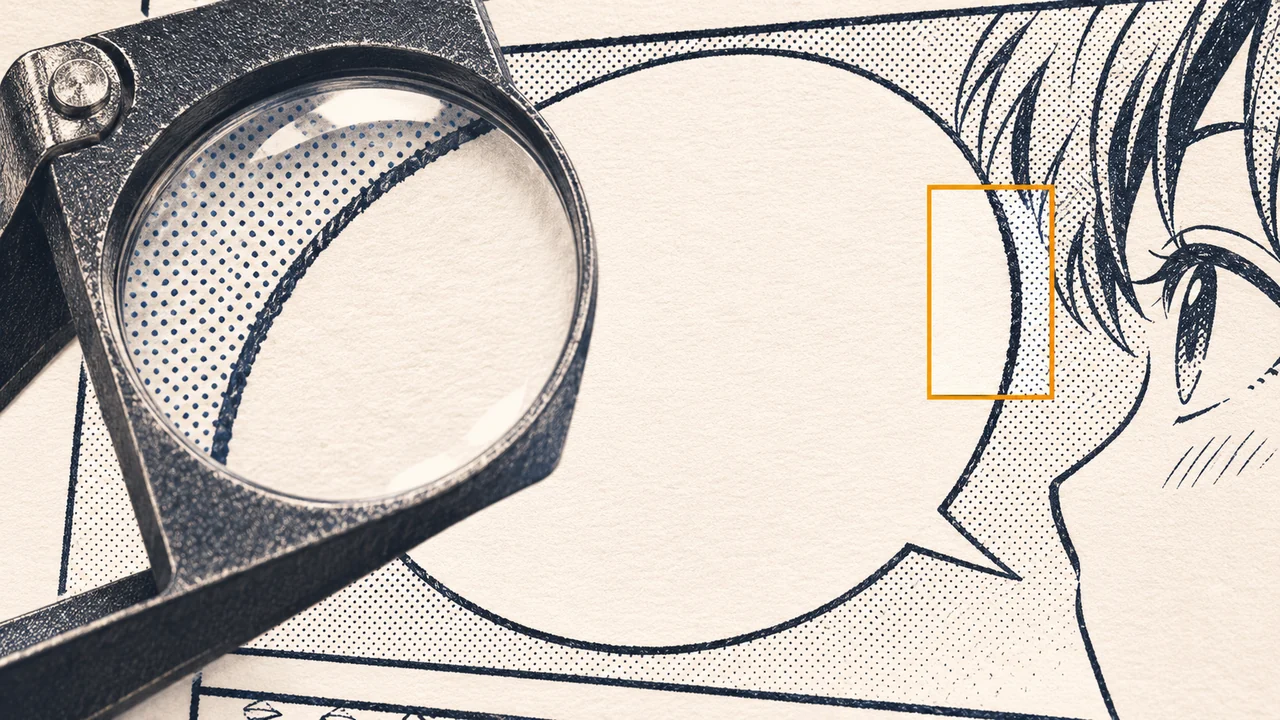
Optical Character Recognition (OCR) has been around for decades, reliably digitizing book scans, business receipts, and PDF documents. Yet, if you run a standard commercial OCR engine like Tesseract, Google Cloud Vision, or ABBYY FineReader on a raw Japanese manga page, it almost invariably fails.
Why is manga OCR considered one of the hardest sub-disciplines in computer vision? And how did modern deep learning models—specifically Vision Transformers (ViT) like Kha-Automated's Manga-OCR—finally conquer it?
Here is the comprehensive technical guide to manga OCR.
Why Standard OCR Fails on Manga: The 4 Structural Hurdles
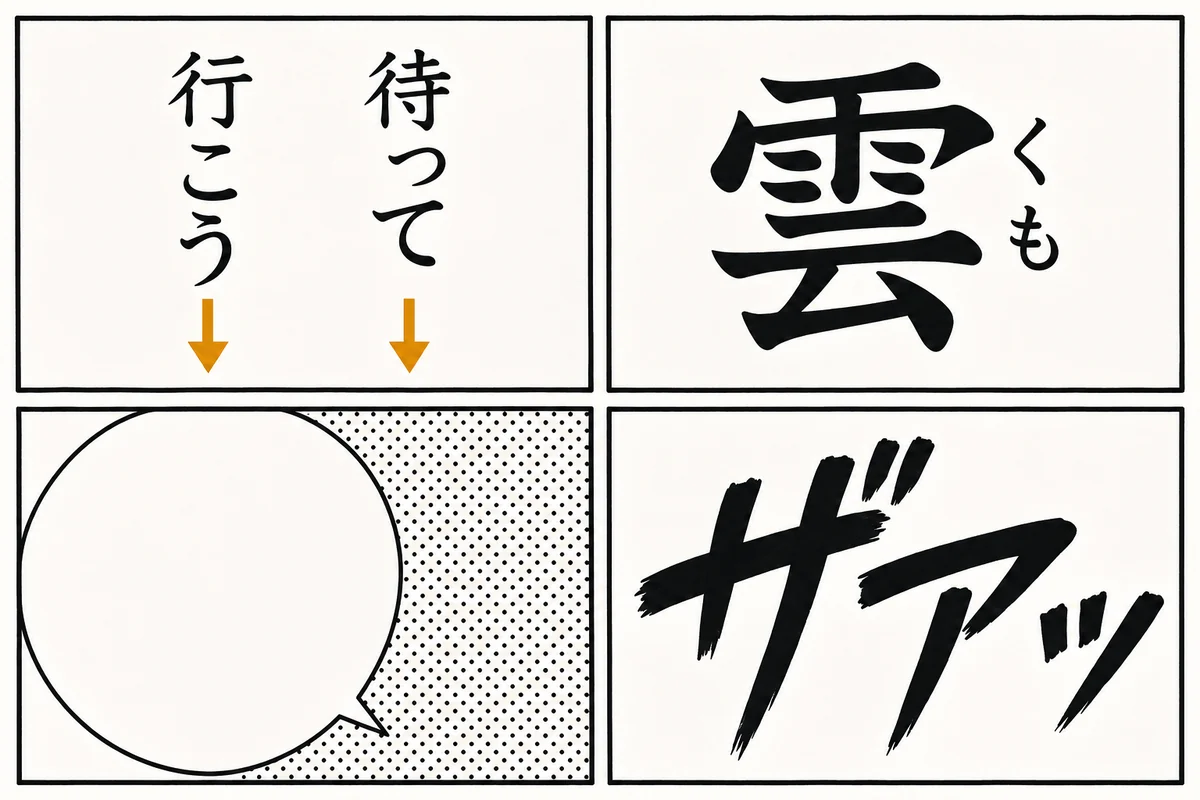
Standard OCR systems are trained on clean, horizontal, monospaced documents with uniform line heights. Manga breaks almost every single one of these assumptions:
The 4 Fatal Traps for Generic OCR
- Vertical Reading Flow (Tategaki). Generic OCR groups characters horizontally.
- Furigana (Ruby Annotations). Tiny phonetic kana read as main kanji radicals.
- Screentone & Background Noise. 60-80 LPI halftone dots parsed as dots and accents.
- Stylized Handwritten Typography. Deformed yelling fonts and whispering side-notes.
1. Vertical Orientation & Right-to-Left Narrative Flow
Japanese dialogue inside speech bubbles is printed vertically (tategaki), read downwards in each line, and ordered from right to left across lines. Generic OCR assumes Western horizontal left-to-right flow. When given a three-column vertical bubble, it reads the top kanji of all three columns first, producing jumbled, incomprehensible sentences.
2. Furigana (Ruby Text) Interference
In shonen and shojo manga, authors print miniature phonetic hiragana (furigana) next to kanji characters to assist pronunciation. Generic OCR cannot differentiate character hierarchy:
- Instead of reading
魔法(Magic), it reads魔ま法ほう. - These extra phantom characters completely derail subsequent translation models.
3. Screentone & Line-Art Clutter
Manga text is rarely printed on sterile white backgrounds. Speech bubbles often sit atop 60–80 LPI screentone textures, speed lines, or half-shaded gradients. Traditional binarization algorithms (like Otsu's thresholding) confuse screentone dot clusters with punctuation marks, quotation marks, or kanji radicals.
4. Non-Standard Expressive Typography
Comic dialogue relies heavily on emotional typography: giant jagged yelling fonts, shaky whispering lines drawn by hand, or characters integrated directly into sound effects (SFX). Rigid template-matching algorithms fail completely.
The Paradigm Shift: Vision Transformers (ViT) & Manga-OCR
The breakthrough in manga OCR arrived with the application of Vision Transformers (ViT) and sequence-to-sequence encoder-decoder architectures, pioneered by Kha-Automated's open-source Manga-OCR project.
Manga-OCR Architecture Pipeline
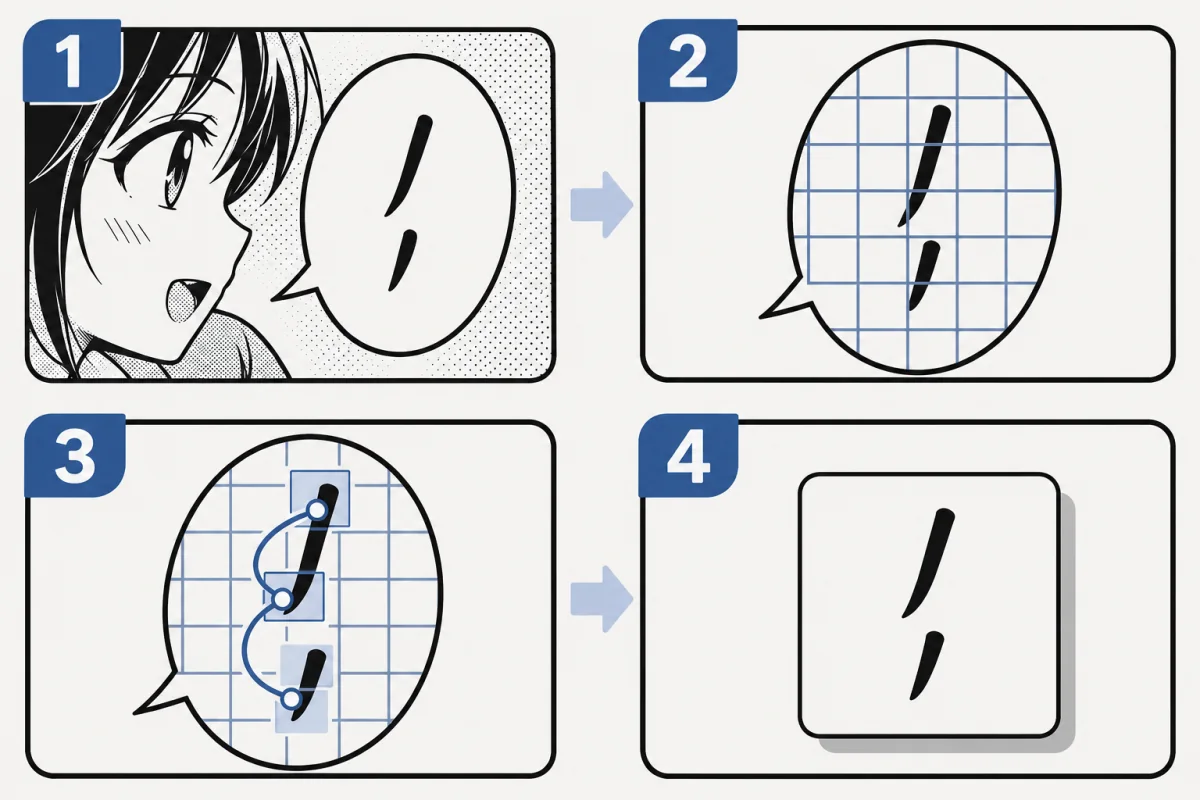
- Cropped Dialogue Image
- Vision Transformer Encoder (Deconstructs image into 16x16 pixel patches)
- Self-Attention Mechanism (Discovers relationship between kanji & ruby furigana)
- Autoregressive Decoder (Outputs clean Japanese text string without furigana noise)
How it Works Under the Hood:
- Patch Projection: The input text line is split into fixed-size 16x16 pixel patches, which are flattened and projected into high-dimensional vector embeddings.
- Self-Attention Layers: Unlike convolutional networks that only analyze local pixels, the transformer's self-attention layers compute global dependencies across the entire bubble. It recognizes that tiny dots next to a kanji are merely annotations and should be discarded.
- Sequence Decoding: A lightweight language model decoder autoregressively predicts the exact sequence of Japanese characters, robustly tolerating heavy font stylization and line skew.
Benchmark: Commercial OCR vs. Manga-Tailored Vision AI
We tested 100 challenging raw Japanese manga crops containing vertical text, furigana, and screentone backgrounds:
| Metric | Google Cloud Vision | Tesseract 5.0 (jpn_vert) | Manga-OCR / AI Manga Translator |
|---|---|---|---|
| Vertical Column Accuracy | 68.4% | 54.2% | 98.7% |
| Furigana Filtering Rate | 12.1% (mixed in) | 8.5% (mixed in) | 99.2% (filtered cleanly) |
| Screentone Noise Rejection | 71.0% | 46.8% | 97.8% |
| Handwritten Note Recognition | 32.5% | 18.0% | 89.4% |
| Average Inference Time (GPU) | 420 ms | 650 ms (CPU) | 85 ms |
Best Practices for Developers & Scanlation Engineers
If you are developing comic translation pipelines or building personal text mining tools:
- Isolate Text Lines Before OCR: Do not feed entire full-page scans into an OCR model. Use a dedicated YOLO bubble-detection model first to isolate individual dialogue regions.
- Maintain Natural Aspect Ratios: Forcing non-square vertical crops into square image buffers distorts kanji proportions; use dynamic padding.
- Leverage Cloud GPU Pipelines: While tools like Mokuro allow local OCR, high-volume batch processing is vastly superior when handled by scalable cloud endpoints like AI Manga Translator.
References & Authoritative Sources
- Manga-OCR Open Source Architecture (kha-white) — Optical Character Recognition for Japanese Comic Text
- Information Processing Society of Japan (IPSJ) — Layout Analysis for Vertical Japanese Script
- Association for Computational Linguistics (ACL) — Sequence-to-Sequence Modeling for Mixed Asian Script OCR